Showing posts with label elder abuse. Show all posts

Friday, July 12, 2013

Timeshare Scams Target the Elderly

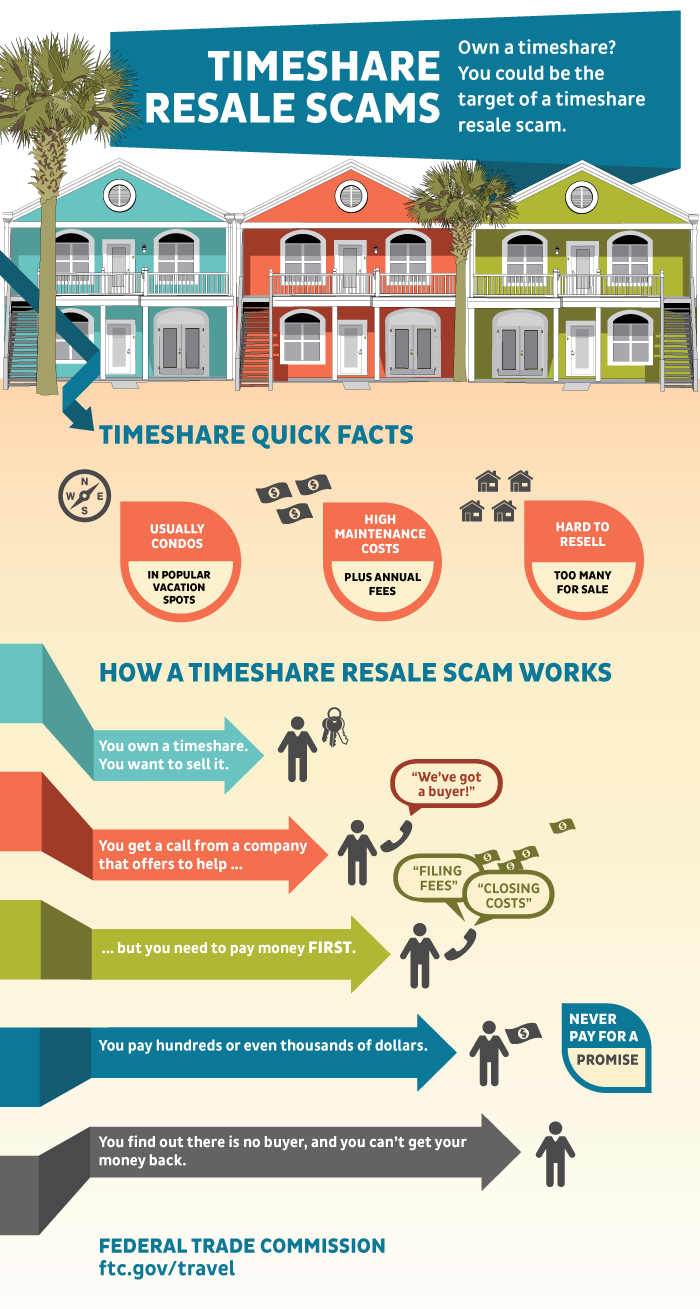
For too many elderly timeshare owners, their dream vacation getaways have turned into nightmares. As bad economic times force them to sell their timeshares, con-artists hawk promises to line up buyers when all they intend to do is take the owner's money – lots of it. Timeshare scammers also connive to trap the elderly in travel-prize schemes that turn into money holes.

Fortunately, the authorities are onto them. The Federal Trade Commission (FTC) announced 191 law enforcement actions to crack down on timeshare-resale and travel-prize scams, including three FTC cases, 83 civil actions in 28 states, and 25 law enforcement actions in ten other countries. 
 
All told, these swindlers bilked their victims out of tens of millions of dollars and 184 people face criminal charges so far. The FTC's announcement comes less than a year after timeshare-resale and travel-prize scams made the Consumer Federation of America's top-ten list of consumer complaints.

"Con artists take advantage of timeshare owners who have been in tough financial straits and are desperate to sell their timeshares," according to the agency. "They persuade owners to pay fat up-front fees by saying they have someone ready to buy the property, but that’s a lie."

Even worse, after a resale scammer has disappeared with thousands of dollars with no buyer in sight, a second con artist calls claiming to represent a "resale recovery services" firm, according to Forbes. This individual makes a false promise to recover the funds lost from the first fraudulent transaction for another hefty fee. After paying the fee, the victim never hears from them again.

The pressure may be intense for a timeshare holder, who can be on the hook for on-going maintenance fees (sometimes thousands of dollars per year) when the management companies fail to honor their contracts.

Typical travel-prize scams lure victims to high-pressure sales presentations with promises of free or discounted travel. For example, Forbes reports that Festiva promised large-screen TVs or cruises to seniors who attended Festiva sales presentations.  The office of the Louisiana Attorney General, which handled scores of complaints against the company, reported that "Once there, [victims] were forced to listen to a six-hour sales pitch. Some never received their ‘prizes,’ others complained that the free cruises ended up costing hundreds of dollars in fees."

To avoid getting scammed:

  • never pay for a promise and be suspicious of up-front fees (don't pay until your unit is sold, advises the FTC)
  • always get everything in writing first
  • have any documentation reviewed by a trusted financial advisor, realtor, or attorney before signing – if a sales rep pressures you to sign or pay something immediately, don't
  • pay close attention to maintenance responsibility and rules for selling a unit
  • before agreeing to anything, check for complaints against timeshare resellers by going online, or contacting the state Attorney General and local consumer protection agency

Tuesday, May 28, 2013

Finding a Caring Caregiver

If an elderly loved one needs at-home care, how do you select a professional caregiver? With careful screening of the person or agency before making your choice.

Tragically, some caregivers physically or verbally abuse their patients — or simply neglect them. And financial exploitation, which leaves no visible marks, can be just as devastating.

Unfortunately, one does not need to look far for examples:
  • A Georgia homecare nurse caught on an ATM camera using her elderly patient's debit card, was indicted on charges of elder abuse and financial transaction card fraud for swiping more than $7,500 from the 86-year-old victim, $2 to $300 at a time.
  • In Illinois, a hospital nursing assistant befriended her 89-year-old dementia patient, and upon his discharge became his round-the-clock caregiver. Prosecutors say she obtained a power-of-attorney, allowing her to steal over $350,000 from his estate which she used to buy a new Mercedes, remodel her home, and enrich herself and her family. The caregiver was held on $350,000 bail and faces up to 15 years in prison on charges of felony financial exploitation of a senior.
Lack of caregiver screening, training, and experience accounts for many cases of elder abuse. As the Huffington Post reports, the Journal of American Geriatrics Society published a study finding that, nationwide, many caregivers are dangerously unqualified because agencies fail to conduct background checks, drug testing, or to require experience or training of new hires. Researchers conducting the study surveyed 180 agencies, but found that only 55 percent conducted federal background checks, and one-third administered drug tests.

The article includes these tips for choosing a caregiver:

Monday, July 16, 2012

ABCs of Elder Abuse

It started with Rodney Chapman mowing Gwendolyn Swank's lawn and doing handyman jobs around her mobile home. They lived across the street from each other in a mobile home park in Pemaquid, Maine, which has the oldest median age in the country. Chapman became Gwendolyn Swank's best friend and worst enemy.

Gwendolyn worked her whole life as a bookkeeper and accumulated over $300,000 in assets. Six years after Chapman befriended her, the balance in Swank's retirement nest egg was 37 cents. On June 12th, 85-year-old Gwendolyn was awarded $1.3 million against Chapman who is serving a five-year sentence for theft and has no ability to pay the judgment.

According to Detective Robert McFetridge who specializes in elder abuse cases, this case followed the ABCs of how to steal money from an elderly person, "A, befriend them. B, slowly start making them dependent on you. C, isolate them from other people. D, take everything they own."

After befriending her, Chapman convinced Gwendolyn to invest in an auto repair and recovery business which she's not sure ever existed. Then Chapman learned that Gwendolyn was scared about illegal drug activity in the area so he fed her fear by pounding on her trailer at night, telling her to stay inside, took her phone away, and restricted visitors and the use of her car, telling her it was for her own safety.

McFetridge investigated the case and said, "In my opinion, it's just as serious as if he had beaten her within an inch of her life … By the time we intervened, she was down to living on peanut butter and rice cakes. She was really a prisoner in her own home."

Tips for protecting yourself against elder abuse:
  • Stay socially active and engaged
  • Do not let anyone rush or pressure you into signing a document, purchasing something, or giving away your money or property
  • Build relationships with the professionals who advise you or handle your money
  • Avoid joint accounts
  • Powers of attorney are useful and important tools, but can be misused
Click here for a directory of state helplines and elder abuse prevention resources.

Tuesday, July 3, 2012

Grandmas Do Cry

Four middle-school students received a one-year suspension from school for bullying a 68-year-old bus monitor to tears. The ugly episode was caught on cell phone video (warning: language), recording the boys' relentless taunts about Grandma Karen Klein's girth.

One student's words were especially cruel saying, "You don't have a family because they all killed themselves because they don't want to be near you."  Klein's oldest son committed suicide ten years ago.

Once the video went viral, the public outcry fueled a fund raiser to raise $5,000 for Klein to take a nice vacation – the result was an astonishing $667,000.

When asked about the bullies' punishment, Klein said the best part was "that they have to do community service for senior citizens." And, because the video went viral, "it's putting people into action, making them talk to their children, making them teach them what they should not do."

Wednesday, April 4, 2012

Senior Scams

The IRS has issued an alert warning seniors that they are the target of yet another scam.

With April 15th looming, the con artist tells seniors they are entitled to a tax refund or stimulus payment but - as many scams go - in order to get the money they need to pay an upfront fee. Of course, the tax refund or stimulus payment never arrives and the upfront payment is never seen again.

This is a new spin on a list of scams that still work so they bear repeating. One scam that has stood the test of time involves the trickster who claims to be a "grandson" (or "granddaughter"), and who calls grandpa (or grandma) frantically explaining that they've been in an accident, arrested, and need money sent quickly to get out of jail. The phone is handed to the kid's "lawyer," who directs the grandparent to send thousands of dollars via Western Union.

This scam only works when worried elders are so rattled that they suppress their legitimate doubts. Don't fall for it!

Here is a list of the Federal Trade Commission's 10 tips to avoid fraud:
  • Remember, once you wire money, you can't get it back.
  • Don't send money to anyone you don't know.
  • Don't respond to any message - phone call, text or otherwise - that asks for personal of financial information.
  • Don't play foreign lotteries.
  • Don't deposit checks from someone you don't know and then wire money back, no matter how convincing the story.
  • Read monthly bills and statements carefully.
  • After a crisis or disaster, give to established charities.
  • Talk to your doctor before buying health products or signing up for treatments.
  • Know where an offer comes from and who you're dealing with.

Wednesday, March 21, 2012

Another "Gray" Area

In our last post, we discussed what is a "reasonable" suspicion for reporting child abuse. This is the same standard used for reporting elder abuse, which can be an equally difficult judgment call.

A case in point involves Mr. Dowdall, a 70-year-old man who suffers from an advanced form of dementia and was not supposed to be driving. However, when he was left at home alone one day, he drove his older model car down to the dealership and traded it in on a brand new convertible. Described as a "frugal man" before the onset of dementia, Dowdall signed a purchase contract for $62,130, including $10,000 of dealer add-ons, without negotiating.

The dealership helped him finance the purchase, obligating Mr. Dowdall to make $923 monthly payments that his wife said he could not afford. So, she hired an attorney to determine if her husband was the victim of elder abuse.

The salesman "acknowledged that something had seemed amiss with the man," but said there was nothing he could do once the sale was completed.

Later, the dealership agreed to take back the car after being "inundated with angry phone calls and emails" in response to media reports of this incident.

Tuesday, September 20, 2011

Abused Actor Sues Stepson

With a boyish face and 5'3" frame, it seemed like Mickey Rooney would never grow old. But, the 90-year-old Hollywood legend filed an elder abuse lawsuit against Rooney's stepson, Chris Aber, and Aber's wife, Christina, alleging financial exploitation and verbal abuse over the past ten years.

In March 2011, Rooney testified before the Senate Special Committee on Aging imploring Senators to take action against elder abuse because "if it happened to me, it can happen to anyone."

According to the complaint, Aber became a signatory on all of Rooney's personal and business financial accounts and then diverted Rooney's mail to a post office box to allow him to fund an extravagant lifestyle without Rooney's knowledge.  Under Aber's threats of financial collapse, Rooney continued to perform, earning income for unpaid taxes and credit card bills Aber incurred under Rooney's name.

Rooney's complaint also names co-conspirators, including Jessie Heuer who ran the website mickeyrooneyfanclub.com to market and sell unauthorized copies of items belonging to Rooney, without Rooney's consent.